
Computer Vision for Safer, More Efficient Construction Sites
Site visibility
Construction environments change every day. Access routes move, subcontractors rotate, equipment enters new zones, and yesterday’s safe camera view can become obstructed by today’s activity. This makes continuous visual awareness valuable, but it also means a fixed, generic AI configuration will not remain useful without operational input.
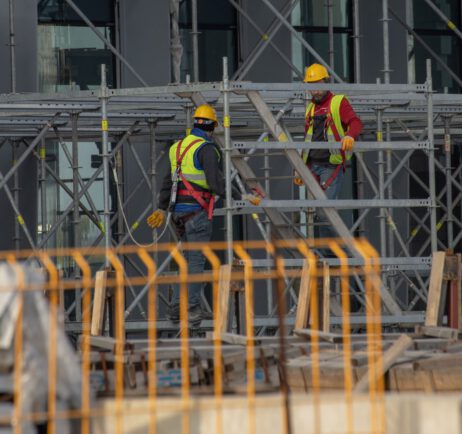
Computer vision can support supervisors by detecting defined events such as missing protective equipment, entry into restricted areas, congestion near loading points, or unsafe proximity between people and moving equipment. The aim is not to replace site leadership. It is to surface time-sensitive conditions that deserve attention.
Safe deployment
A responsible deployment begins with a documented use case and a clear response workflow. Teams decide what the model observes, who receives an alert, how quickly it should be reviewed, and what evidence is retained. Workers should also understand the purpose and limits of the system before monitoring begins.
Camera placement is validated in real operating conditions, including low light, rain, dust, reflective clothing, and partial occlusion. Alert thresholds are tuned with supervisors so normal activity does not create noise. When the site layout changes, zones and rules are reviewed instead of assuming the original setup is still valid.
- Monitor operational events rather than named individuals.
- Keep raw video processing on-site where the architecture allows it.
- Review false positives with site teams and use them to improve the model.
Operational value
Useful safety data reveals patterns that isolated incident reports cannot. Repeated congestion in one corridor may point to a scheduling problem; recurring PPE alerts at a particular entry may indicate a process gap; near-miss patterns can inform toolbox talks before an injury occurs.
The strongest programs connect these insights to existing safety routines. AI alerts become one input to daily briefings, corrective actions, and site redesign—not a separate dashboard that nobody owns.